Showing posts with label Hillel Milo. Show all posts

Tuesday, November 18, 2008

Green Economy Conference in Tel Aviv

The annual Green Economy Conference, organized by Ernst & Young, The Marker, and Life and Environment (Chaim ve' Sviva), an umbrella organization incorporating the work of over 80 environmental organizations in Israel, is scheduled to take place in Tel Aviv on November 20th.
The organizers have put together an impressive agenda, which includes presentations from international cleantech leaders like Jeff Renaud (Director, Ecomagination, GE); Neil Auerbach (Managing Partner, Hudson Clean Energy Partners); Michel Goguen (General Partner, Sequoia Capital); Roger Saillant (Former CEO, Plug Power); Justin Adams (Head of Venturing, BP Alternative Energy); Shai Weiss (Managing Partner, Virgin Green Fund); and Nick Parker (Co-Founder and Chairman, Cleantech Group).

Israeli cleantech industry leaders participating in the conference include Glen Schwaber (General Partner, Israel Cleantech Ventures); Astorre Modena (General Partner, Terra Venture Partners); Booky Oren (President & CEO, Miya, Arison Group); Hillel Milo (Managing Partner, AquAgro Fund); and Tamar Naor (Founder, TN Ventures).

If you are in Israel this week, this event is a "can't miss" event.

I recently had a chance to speak with Itay Zetelny, Cleantech Leader for Ernst & Young Israel, about the Green Economy Conference and his take on Israel's cleantech industry.

JS: What are the origins of the Ernst & Young's Cleantech Conference?

IZ
: The first CleanTech Conference took place in 2007 as an independent track within the WATEC Convention. The success of the event together with the enthusiastic feedback led Ernst & Young to organize its own event.


JS: What are the goals of the conference? Who should attend?

IZ: The object is to offer Israeli Cleantech entrepreneurs a unique opportunity to present their ventures to leading global investors and create a platform for in-depth discussions regarding possible partnerships and/or investment opportunities. In addition, we are aiming to raise the awareness of the business community as well as of decision makers to the growing importance and value of sustainability considerations in business today, vis-à-vis the climate crisis.The conference will be focusing on the Cleantech sector performance in global financial markets, climate change as a business opportunity, technology trends, project financing, collaboration and multinational companies’ perspective as well as rules and regulations. It is intended for R&D companies, project companies, VCs, investment banks, international technology providers and researchers.


JS: What is Ernst & Young's role in Israel's cleantech industry? What services do you and the Cleantech Advisory Group provide to investors and entrepreneurs?

IZ: Ernst & Young ia a pioneer in offering services to the growing Cleantech industry in Israel. Three years ago the firm has undertaken the task of developing a unique and comprehensive platform for water and energy companies. Today our Cleantech Advisory Group is the largest of its kind in Israel and offers ongoing assistance to entrepreneurs and companies which includes: identifying local and global VCs, management of technological cooperation, project financing, audit services and tax consulting services.


JS: What are the most important (emerging) trends in Israel's cleantech industry?

IZ: Over the first half of 2008 the amount invested in Cleantech companies reached $140 M as opposed to $122M in 2007. These sums do not include two major investments: “Better Place Project” - $200 M in 2007 and “Brightsource” - $115 M in 2008 which involved venture capital funds, PEs and banks. The substantial increase in investment is a result of the VCs' penetration into the market and the growing participation of traditional funds in Cleantech investments. As expected, since the end of 2006, most Israeli VCs have been investing in Cleantech, a trend which is expected to grow in the future.

Additional reasons for increased investments include:

1) Continuous search for technologies and Cleantech companies by Arison, Ofer Brothers, Dankner, Recanati and others

2) Foreign funds which are establishing local operations to ensure continuous exposure to the local industry including: Virgin, Sequoia and Greylock

3) International companies which are establishing local business development activities such as GE and Siemens

4) Israeli private equities which have begun expressing interest in the field and are currently searching for ways to penetrate it

5) Although angels are investing low sums of money in each company the total amount invested is significant

In conclusion, the local Cleantech industry has attracted much attention over the past year. And despite the sub-prime crisis which is affecting all markets, the Cleantech industry will continue to appeal to investors.

Saturday, February 23, 2008

AquAgro Fund announces launch of Aqua Lab for early stage investments

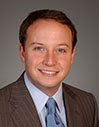
Nir Belzer and Hillel Milo, the managing partners of the AquAgro Fund, announced the launch of Aqua Lab and discussed their fund's investment strategy in an exclusive interview in "Globes".

AquAgro Fund, a venture capital fund affiliated with Gaon Agro Industries Ltd., is focused primarily on mid-to-late stage water, agriculture and other cleantech-related companies. The fund recently invested $4 million in Advanced Desalination Technologies. AquAgro has raised $40 million and plans to close on $100 million by the end of 2008.

Aqua Lab


With the launch of Aqua Lab, which will operate in a format similar to that of a technology incubator, AquAgro Fund will now also be involved in making seed and early-stage investments.

"We decided to set it up together with two overseas funds, and it will be managed by Oded Sagee [Chief Scientist of Gaon Agro Industries]," says Nir Belzer. "The important thing here is that Aqua Lab is not a fund, and so there are no limitations on the time one can spend raising money for it. Venture capital funds, by contrast, have a deadline set out in the prospectus, by which time you have to have secured the maximum commitment out of the designated target sum. We will decide whether to float or merge Aqua Lab depending on how profitable and successful it is. In other words, its unique structure gives us flexibility in various matters," Belzer adds. Milo will be company chairman.

According to Belzer, each company under the Aqua Lab umbrella will receive between $250,000 and $750,000 in investment, with an option of follow-on investment under the auspices of the AquAgro Fund. Belzer and Milo prefer not to disclose the names of the funds that have joined the investment so far but say that one is from the US and the other European, with all three entities owning the company in equal shares.

"We want Aqua Lab to have an international character with the partners sharing responsibility," explains Milo. At the same time as the tying up of the procedural ends entailed in the formation of the company, which has already been registered, Aqua Lab is seriously considering investments in two companies, and hopes to finalize these by the end of the current quarter. Also under consideration are early stage investments in four more companies.

Investment in agriculture and food

Globes: How will the fund operate?

Milo: "It will last for 8-10 years. We will not invest more than 10% of the fund in one company and we intend to reach 12-13 investments in all, provided that we manage to raise $100 million. The idea is to create an adequate spread of the risks on the one hand, while maintaining a critical mass in each company on the other."

Belzer and Milo have known each other for 10 years, and both have gained knowledge and investment experience in other funds. They teamed up with Benny Gaon, Chairman of Gaon Agro Industries, who wanted to set up a cleantech fund, and gave it shape and focus. He brought the money. The fund focuses principally on water, alternative energy, smart agriculture and food, "and we don't go in for trends," says Belzer. "We will stick to things that really are essential. Such as, for instance, cost reduction, which is a critical factor when selecting a technology - reducing the price of a cubic meter of desalinated water, a kilowatt hour of solar energy, and the consumption of water per hectare for a specific crop," Milo explains.

The fund employs a utility model when investing in technologies designed to cut costs. This means that if the company has significantly reduced its price per unit, the fund shares in the profits and not just the technology. "This is the sole incentive to buy technologies like these. Ultimately, it's a commodity, so costs are a critical element," says Belzer.

What differentiates your fund from others?

Milo: "We have several unique characteristics, one of which is the fact that we will also invest in agriculture and food, fields which other cleantech funds (worldwide as well) avoid. Because of the changes in regulation and requirements in the food industry, there are now a lot of investment opportunities for venture capital in these two fields."

Belzer: "There is now rivalry between products that serve as food ingredients and fuel applications. Smart agriculture focuses on the growing of inedible crops, on residual land and in saline water. One option is the growing of seaweed. There is no shortage of saline water in the Negev, the Jordan Valley and the Arava region. Israel will be an excellent trial site for this, and the big money will be in the growing of raw materials for producing biomass fuel. We're well ahead of the rest of the world in smart agriculture and water and we are poised to build a strong strategic presence in them."

Hillel Milo is a mechanical engineer and co-founded Walden Israel, Clal Venture Capital, and Israel Infinity Venture Capital, and was also managing partner of Alice Ventures. Nir Belzer is a computer and avionics engineer and co-founder of the Millenium funds.